

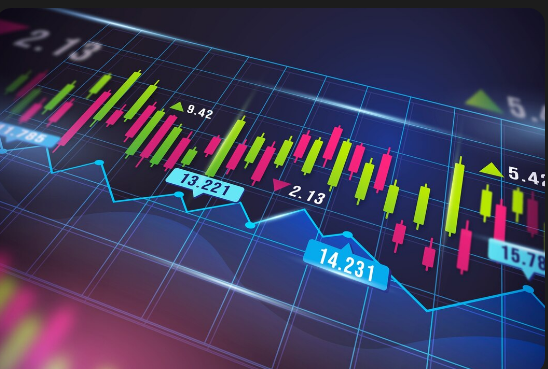
This article focuses on the common mistakes to avoid with Japanese candlesticks, Japanese Candlesticks are the foundation of modern price action trading, offering deep insights into market psychology. However, many new and even intermediate Forex traders make simple yet costly mistakes that turn reliable signals into losing trades. To truly master the art of reading the chart, you must not only recognize the patterns but also understand the context in which they fail. Here are the most common errors and how to actively avoid them;
In This Post
1. Ignoring the Timeframe (The Noise Trap)
One of the biggest mistakes traders make is relying on candlestick patterns observed on low timeframes (like $1$-minute or $5$-minute charts). These short timeframes are filled with market noise—random, high-frequency fluctuations that do not reflect genuine supply and demand shifts.
- The Mistake: Executing a trade based on a Hammer that forms on the $5$-minute chart.
- The Solution: Always trade candlestick patterns on higher timeframes ($4$-Hour, Daily, or Weekly). A pattern that forms on a $4$-Hour chart represents $4$ hours of collective psychological pressure and is significantly more reliable than a $5$-minute flicker. Use lower timeframes only for precise entries after the high timeframe has already given you the directional bias.
2. Trading Patterns in Isolation (Missing the Confluence)
A candlestick pattern, by itself, is just a shape. Its power comes only when it occurs at a significant “confluence” point on the chart. Trading a pattern simply because you recognize its shape without considering the surrounding structure is a high-risk activity.
- The Mistake: Buying after seeing a Bullish Engulfing pattern in the middle of a consolidation range.
- The Solution: Confirm the pattern’s importance. A powerful pattern must align with at least one other major technical element to be valid:
- A major Support or Resistance level.
- A strong Trend Line.
- A Fibonacci Retracement level (e.g., $50\%$ or $61.8\%$).
- A Psychological Round Number ($1.20000$).
- A Candlestick at confluence is a magnet for high-probability setups.
3. Forgetting the Confirmation (Jumping the Gun)
A reversal candlestick pattern (Hammer, Shooting Star, Engulfing) merely indicates the potential for a reversal. It does not guarantee the reversal will continue. Many promising signals turn out to be false if the market immediately returns to the prior trend direction.
- The Mistake: Entering a short trade immediately after a Shooting Star finishes forming.
- The Solution: Wait for confirmation. For a bearish signal, wait for the candle immediately following the pattern to close lower than the pattern’s close. This confirms that sellers are indeed following through and driving the price in the new direction. Patience protects you from whipsaws and false breakouts.
4. Misinterpreting the Wicks (Ignoring Rejection)
The wicks (or shadows) of a candlestick are often more important than the body itself, yet they are frequently misinterpreted or ignored. The wick shows price rejection—the crucial battle that occurred during the period.
- The Mistake: Seeing a large wick on both the top and bottom of the candle and assuming the trend is continuing.
- The Solution: Focus on the relative wick size and location.
- A Bullish Reversal (Hammer) requires a long lower wick and a tiny upper wick, showing aggressive rejection of lower prices.
- A Bearish Reversal (Shooting Star) requires a long upper wick and a tiny lower wick, showing aggressive rejection of higher prices.
- Large wicks on both sides (a Doji or Spinning Top) primarily signal indecision, not a reversal, and often suggest the best action is to wait.
5. Over-reliance on Pattern Names (Understanding the Story)
Many trading guides emphasize memorizing dozens of candlestick pattern names (Three White Soldiers, Three Black Crows, etc.). This leads to confusion and often causes traders to miss the simpler, core market message.
- The Mistake: Spending time trying to name a complex pattern instead of interpreting the basic OHLC data.
- The Solution: Simplify. Instead of focusing on the name, ask three fundamental questions:
- Who Won? (Buyers or Sellers? Look at the body size/color).
- What Price Was Rejected? (Look at the long wick and its location).
- What Does the Rejection Mean? (Does it align with a Support/Resistance level?).
- By understanding the psychological story behind the candle, you gain a far deeper and more flexible understanding of the market than memorizing a fixed set of names.
Frequently Asked Questions
Does the color of the body matter for a Hammer?
- Yes, but it’s secondary. For a Bullish Hammer, if the body is green (closed above the open), it is a slightly stronger signal because buyers achieved full control by the close. However, the long lower wick showing the massive rejection of low prices is the primary signal, regardless of whether the body is red or green.
Why do Candlestick patterns fail in range-bound markets?
- In a range-bound (sideways) market, there is no prevailing trend, and price often whipsaws between horizontal boundaries. Candlestick patterns, especially reversal signals, are designed to signal the end of a trend. When there is no clear trend, the signals are less reliable, and the market often fakes out traders.
What is a “False Breakout” and how do candlesticks prevent it?
- A False Breakout occurs when the price temporarily moves past a key Support or Resistance level, trapping traders, before immediately snapping back. To prevent being trapped, you must wait for the candlestick to close completely above or below the level. A closing candle that pulls back to form a long wick suggests the breakout failed and was a trap.
Should I use technical indicators with candlesticks?
- Absolutely. Candlesticks are the “what” (price action), and indicators are the “how strong.” Use indicators like the Relative Strength Index (RSI) or Stochastics to confirm if the market is Overbought (bearish signal) or Oversold (bullish signal) when a Candlestick reversal pattern appears. This adds another layer of confluence.
Why do institutional traders prefer candlestick charts?
- Institutional traders prefer candlesticks because they offer instantaneous visualization of psychology. A quick glance tells them who was in control (buyers or sellers) during that period, the volatility (the length of the bar), and where the price was definitively rejected (the wicks). This speed of information is critical in fast-moving markets.